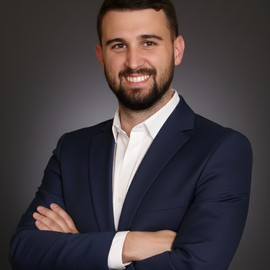
I am a Lecturer in Economics at the Universitat Internacional de Catalunya and a researcher working at the intersection of political economy, applied microeconomics, and European integration. My work examines how institutions and policies shape individual behaviour and economic outcomes, with a focus on labour markets, housing, and welfare states in Germany and the EU. I also teach at the Universitat Oberta de Catalunya, at the Master’s in Economic Analysis and the Master’s in International Relations. My working languages are Catalan, Spanish, English, German, and French.
- Political Economy
- Applied Microeconomics
- European Integration
- Social Policies
- Housing Economics
PhD in Economics, 2024
Universitat de Girona
MSc in Political Analysis, 2018
Universitat Oberta de Catalunya
BSc in Economics, 2016
Universitat de Girona
Research
My research lies at the intersection of political economy, applied microeconomics, and European integration. Current projects examine housing markets in Germany, welfare state reform and political behaviour, and the determinants of support for European integration. I use microeconometric methods applied to survey and administrative data.
Selected Publications
Teaching
I teach macroeconomics, microeconomics, and international political economy at undergraduate and graduate levels at the Universitat Internacional de Catalunya and the Universitat Oberta de Catalunya.
Contact
Feel free to get in touch by email.
- sourzay@uic.es
- Immaculada, 22, Barcelona, 08017
- By appointment